
Floating Wetlands: Youth-Led Climate Innovation Transforming Communities
Published on December 2, 2025
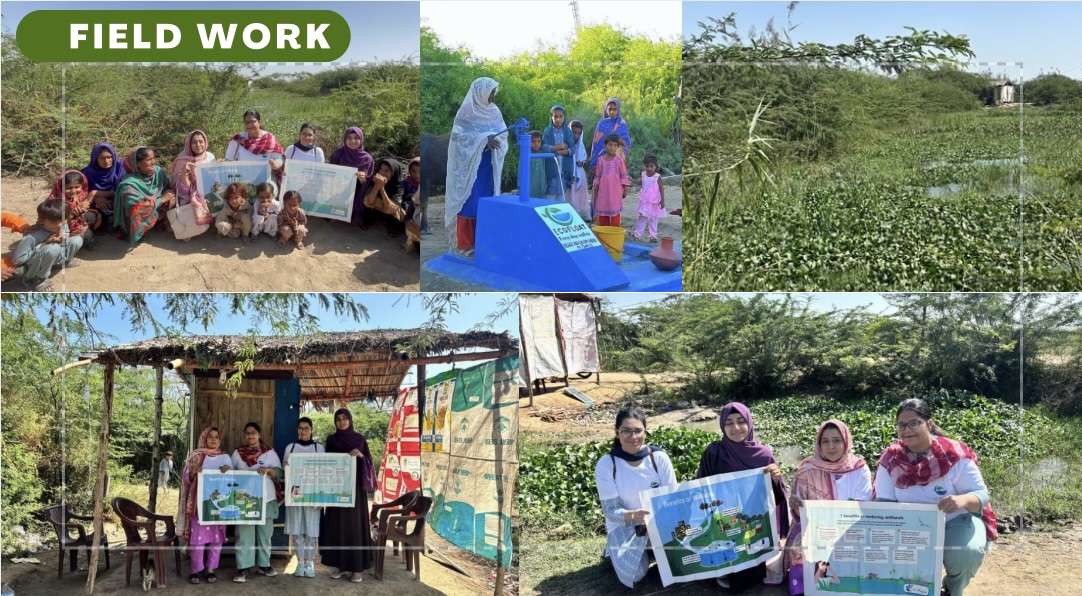
The Floating Wetlands Project was conceptualized and implemented by a group of four students from IBA University, working under the team code PKTeam22. The project began in March 2024 and continued until December 2024 as part of a South Asia regional climate leadership program led by Seeds of Peace in collaboration with Beyond the Classroom. The initiative aimed to empower young leaders to design innovative, community-centered solutions for environmental challenges across the region.
Within this program, the IBA team participated in the Students’ Society of Climate Change Competition, where they introduced their project titled “Floating Wetlands.” The idea focused on restoring polluted water bodies, inspired by the deteriorating condition of Karachi’s Lyari and Korangi rivers, where untreated sewage and industrial waste had destroyed aquatic life.
The team proposed using recycled materials such as bamboo, jute, and plastic bottles to create floating platforms planted with aquatic species like duckweed and water lettuce. These plants naturally absorb heavy metals, toxins, and excess nutrients through rhizofiltration, offering a low-cost, nature-based solution to urban water pollution. The idea combined scientific innovation with community education and circular economy principles.
The project received strong acclaim for its originality and feasibility. It earned national-level media recognition — featured on Pakistan national television, highlighted by The Express Tribune, and showcased in a Deutsche Welle (DW) documentary that amassed over 1.4 million global views. This visibility placed Pakistani youth–led climate innovation on an international platform.
As the national winner from Pakistan, PKTeam22 represented the country in a cohort of South Asian finalists and were selected for a fellowship at Vanderbilt University (USA). There, the team presented their project to global experts, received professional and leadership training, and learned advanced techniques for scaling climate solutions.
Expanding Through the Open Hands Initiative (OHI)
After returning to Pakistan, the team applied for and received the Open Hands Initiative (OHI) grant to transform their idea into a real-world community project. This phase launched in June 2025, shifting the focus from urban rivers to rural waterlogged lands in Badin, Sindh.
The vision was simple yet powerful:
Transform unused and waterlogged land into productive, climate-resilient ecosystems through floating wetlands and sustainable fodder farming.
Project Story: From Vision to Impact (June – December )
1. Establishing Four Community-Based Wetlands
The project began by identifying underutilized, stagnant water bodies in rural Badin.
The team successfully excavated and developed four ponds, each playing a unique role:
• Pond 1: A full one-acre water hyacinth wetland, which grew vigorously within three months.
• No decay, no loss — full pond coverage
• Absorbed an estimated 940 kg of carbon emissions
• Created natural cooling and revived biodiversity
• Ponds 2–4: Introduced duckweed farming, producing high-protein fodder for cows, buffaloes, goats, ducks, and fish.
2. Introducing Azolla Farming (New Addition)
To prepare communities for winter fodder shortages and Lal-Nina drought-like conditions, the team introduced Azolla, another fast-growing aquatic plant known for:
• 20–25% protein
• Rapid growth
• Suitability for winter season
• High nutritional value for livestock
The newly established Azolla farms are expected to produce 1.5 tons of fodder in the next 2–3 months, adding to community resilience.
3. Fodder Production & Livelihood Impact
Across all ponds to date:
• Total fodder produced: Over 2 tons
• Azolla projected output: 1.5 tons more
• Beneficiaries so far:
• 200 households
• 12 farmers trained
• 100 livestock animals receiving improved nutrition
4. Water Access – Installing Hand Pumps
To maximize community benefit, the team installed two hand pumps near the wetlands.
Each pump delivers:
• 2,400 liters per day
• = 635 gallons of clean groundwater per day
• Supporting daily household needs, livestock drinking water, and irrigation
These wetlands now act as natural sponges — capturing, storing, and redistributing rainwater that would otherwise be lost.
Community Engagement & Education
The project also conducted:
• WASH (Water, Sanitation & Hygiene) sessions
• Awareness programs for women and adolescent girls
• Environmental learning sessions for schoolchildren
• Field visits for university students and volunteers
This strengthened knowledge on clean water practices, hygiene, and sustainable agriculture.
Partnerships and Visibility
Partnerships with UNICEF, Penny Appeal, local schools, and universities helped amplify the project’s reach.
The floating wetlands model was presented to the Country Head of UNICEF, who appreciated its innovation and community benefit.
What This Project Represents
This journey shows how a locally rooted, youth-led idea can evolve from:
A university competition → national recognition → global fellowship → on-ground community transformation.
The wetlands are no longer just ponds — they are living classrooms, models of rural climate resilience, and proof that sustainable solutions can grow from within communities themselves.